

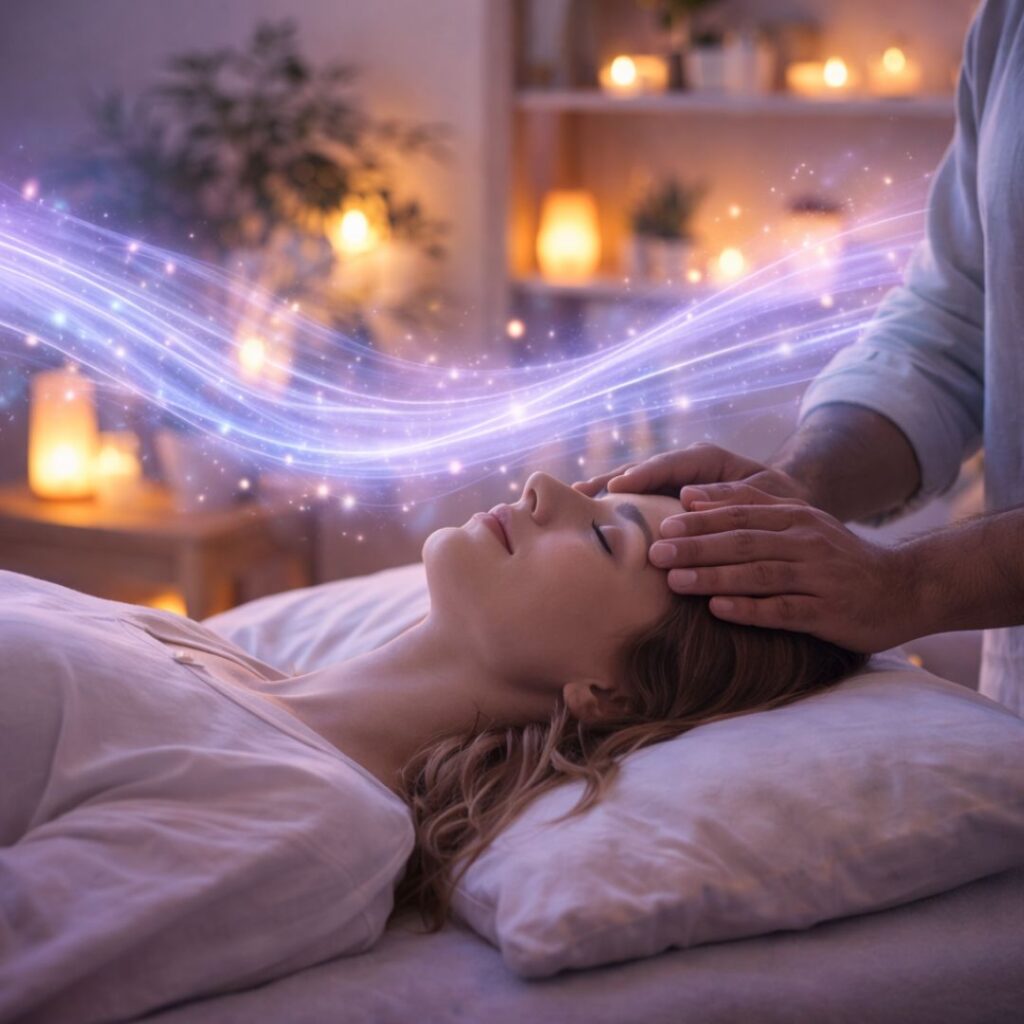
Why Therapists Are Recommending 432 Hz Music for Emotional Release Sessions, Emotional release work whether in psychotherapy, somatic therapy, breathwork, trauma-informed sessions, or energy healing requires a delicate balance of safety, softness, and openness. In recent years, an increasing number of therapists and wellness practitioners have begun incorporating 432 Hz music into their emotional release sessions to support this process.
Clients often describe 432 Hz music as warm, grounding, heart-centered, and emotionally intuitive qualities that make it especially effective for exploring and releasing difficult emotions.
But what exactly makes this frequency so helpful in therapeutic environments?
Let’s explore why therapists around the world are embracing 432 Hz as a powerful ally in emotional healing.
1. 432 Hz Helps Regulate the Nervous System Quickly
Emotional release cannot happen when the nervous system is in a state of tension or hyper-arousal.
432 Hz music naturally supports:
A slower heart rate
Softer breathing
Reduced muscle tension
A sense of inner safety
This shift into the parasympathetic nervous system allows clients to access deeper emotional layers without feeling overwhelmed.
Therapists report that clients settle into sessions faster and more comfortably with 432 Hz playing in the background.
2. It Creates a Sense of Emotional Safety
To release emotions, the body must perceive that the environment is safe.
432 Hz music is known for:
Warm harmonic tones
Gentle, non-invasive textures
A soothing sense of space
These qualities help clients relax emotionally, letting down their defenses and allowing feelings to surface naturally.
For trauma-informed work, this sense of safety is essential.
3. 432 Hz Supports Somatic Processing
Many emotions live in the body, not just the mind.
Somatic therapists use 432 Hz because it helps clients:
Feel sensations more clearly
Notice emotional tension stored in the body
Release tightness, heaviness, or blockages
Connect breathing with emotional movement
The frequency encourages a body-first healing process, which is often more effective than cognitive work alone.
4. It Encourages Deep Breathing and Emotional Softening
During emotional release sessions, breathing is one of the most important tools.
432 Hz subconsciously encourages:
Longer exhalations
Slower breathing cycles
A relaxed diaphragm
A sense of spaciousness in the chest
This naturally supports crying, shaking, sighing, or emotional opening all healthy mechanisms of release.
5. Helps Clients Access Repressed or Stored Emotions
Therapists have observed that 432 Hz music helps clients connect with emotions that are:
Buried
Avoided
Suppressed
Too overwhelming to face alone
The gentle resonance of 432 Hz softens internal resistance, making it easier for clients to acknowledge what they feel without shutting down.
6. Reduces Overthinking and Mental Interference
The intellect often gets in the way of emotional release.
Because 432 Hz shifts brainwaves toward alpha and theta states, it helps:
Quiet the analytical mind
Reduce intrusive thoughts
Encourage emotional presence
Support intuitive self-awareness
This allows clients to experience emotion directly rather than analyzing or judging it.
7. Supports Trauma Release and Grounding Afterward
After releasing difficult emotions, grounding is essential.
432 Hz helps clients:
Return to a calm baseline
Reconnect with their body
Restore emotional stability
Integrate what surfaced during the session
Therapists often continue playing 432 Hz during the final minutes of the session to support closure and grounding.
8. Ideal for Breathwork, Reiki, EFT, Somatic Experiencing & Inner Child Work
Across different modalities, practitioners consistently report that 432 Hz enhances emotional work.
Works especially well with:
Somatic experiencing
Breathwork journeys
Reiki healing
EFT tapping
Inner child therapy
Trauma release exercises
Meditation-based therapy
The frequency amplifies emotional access while maintaining a soft, supportive field.
9. Why Emuna Music Is a Top Choice for Emotional Release Sessions
Emuna Music is widely used by therapists, healers, and meditation teachers because its compositions are specifically crafted for emotional depth and energetic balance.
Professionals choose Emuna Music because:
The soundscapes are purely 432 Hz
Tracks are long, stable, and non-distracting
Textures are warm, atmospheric, and heart-centered
The music supports emotional opening without overwhelm
Transitions are smooth and intentional
Popular choices for emotional release include:
Healing Meditation
Deep Calm I
Eternal Sanctuary 432 Hz
Inner Sanctuary
Contemplation
Healing Waves
These tracks help create a healing environment where clients feel safe to explore and release deeply held emotions.
10. The Future of Therapy Is Sound-Supported
As therapists continue to integrate somatic work, trauma-informed care, and holistic modalities, sound healing especially 432 Hz is becoming an essential tool.
It enhances emotional access, supports regulation, and deepens the client’s ability to process their internal experience.
For many professionals, 432 Hz has become a quiet but powerful companion to the therapeutic process.
Final Thoughts
Therapists are not choosing 432 Hz music because it is trendy. They’re choosing it because it works.
By calming the nervous system, opening emotional pathways, reducing fear, and creating a safe energetic environment, 432 Hz helps clients release what the body has carried for too long.
And with the emotional, heart-centered compositions of Emuna Music, both therapists and clients can experience a deeper, gentler, and more transformative emotional healing process.